What Is Sourdough Discard? A Beginner’s Guide to Using Every Bit of Your Starter
If you’ve recently started your sourdough journey, you’ve probably come across the term sourdough discard. And if you’re anything like most beginning sourdough bakers, you’ve probably wondered why you’re supposed to throw away something you’ve worked so hard to grow!
Here’s the good news: Sourdough discard doesn’t have to go to waste.
In fact, some of the most delicious recipes you can make in your kitchen begin with that extra bit of sourdough starter.
Here at Red Brick Ranch, we believe in making the most of what we have, preserving old-fashioned baking traditions, and finding creative ways to turn simple ingredients into something wonderful.
Let’s explore what sourdough discard really is, why it happens, and how you can put it to good use.
What Exactly Is Sourdough Discard?
Sourdough discard is simply the portion of sourdough starter that you remove before feeding the remaining starter with fresh flour and water.
A sourdough starter is a living culture of wild yeast and beneficial bacteria. These microorganisms ferment the flour and water, producing the bubbles, flavor, and natural leavening power that make sourdough bread so special.
To keep your starter healthy and active, it needs regular feedings.
But here’s the catch: if you continually add flour and water without removing any starter, you’ll eventually have more than you know what to do with!
That’s where discard comes in.
Removing a portion before feeding keeps your starter at a manageable size while reducing the amount of flour needed to maintain it.
And despite its name, sourdough discard is often perfectly usable in the kitchen.
Why Do We Discard Sourdough Starter?
Think of your sourdough starter as a little kitchen companion that needs regular nourishment.
Each time you feed it, you’re giving the yeast and bacteria fresh food to continue growing.
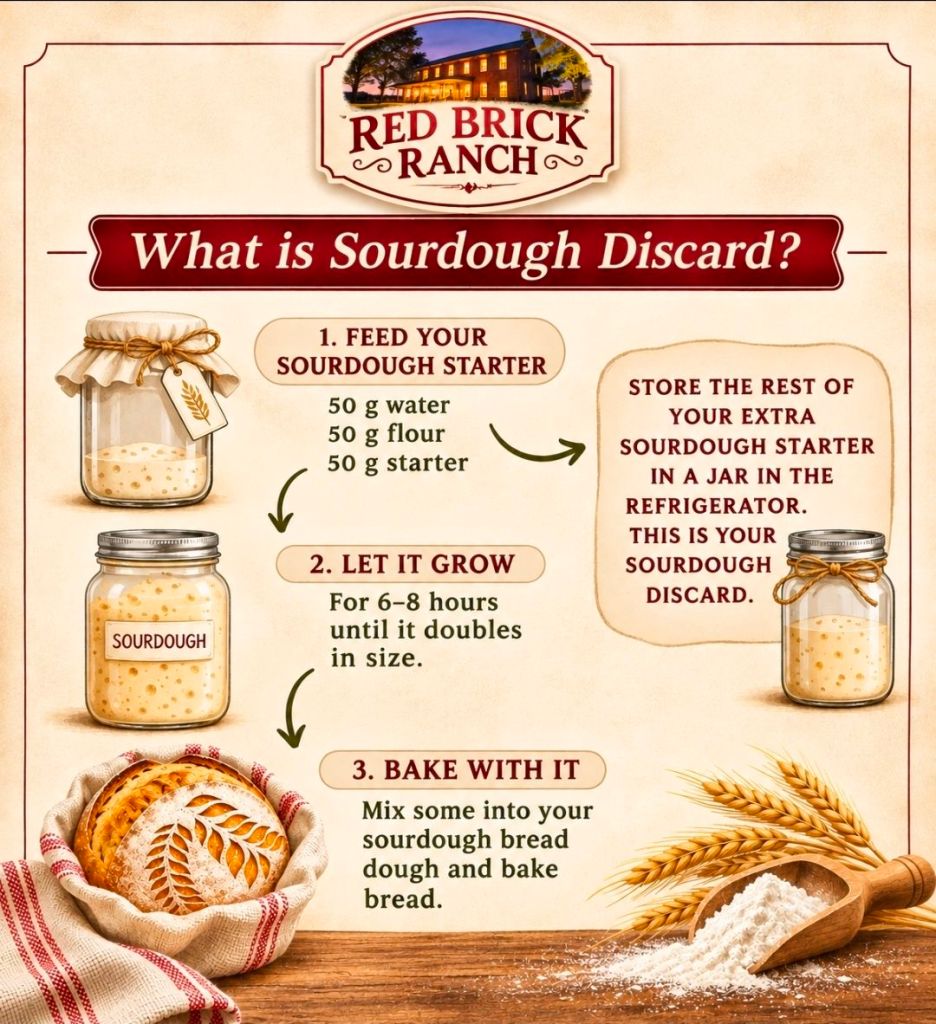
For example, at Red Brick Ranch, we often use a simple 1:1:1 feeding ratio by weight:
• 50 grams sourdough starter
• 50 grams unbleached flour
• 50 grams water
Mix everything thoroughly, cover loosely, and allow the starter to ferment until it’s bubbly and has risen significantly.
Depending on your kitchen temperature and the activity of your starter, this may take approximately 4–12 hours or longer.
When it’s time for the next feeding, you can keep 50 grams of starter and remove the extra.
That removed portion is your sourdough discard!
A little tip from the ranch: You don’t have to maintain a huge jar of starter. Keeping a smaller amount and feeding only what you need can save flour, reduce waste, and make sourdough baking much easier. You can also store your starter in an airtight container in the refrigerator. More on that below…
What’s the Difference Between Active Starter and Sourdough Discard?
Although they come from the same culture, active starter and discard are generally used differently.
Active Sourdough Starter
Active starter has recently been fed and has become bubbly, risen, and full of fermentation activity.
It’s typically used in recipes that rely on sourdough fermentation to make bread rise naturally.
Examples include:
• Traditional sourdough bread
• Sourdough sandwich loaves
• Naturally leavened dinner rolls
• Sourdough pizza crust
• Sourdough English muffins
Sourdough Discard
Discard is starter that has been removed during feeding and may be past its peak activity.
It still contains fermented flour and water, along with the microorganisms responsible for sourdough’s characteristic flavor.
However, it may not have enough leavening strength to reliably raise a loaf of bread on its own.
That’s why many discard recipes use baking powder, baking soda, or commercial yeast for additional lift.
The biggest difference? Active starter is usually used for its rising power, while discard is often used for its flavor, texture, and versatility.
10 Delicious Ways to Use Sourdough Discard
One of the best things about keeping a sourdough starter is discovering just how many recipes you can make with the extra!
Here are ten of our favorite ideas for putting sourdough discard to work.
1. Sourdough Pancakes
There’s something wonderful about a stack of homemade pancakes on a chilly Indiana morning.
Sourdough discard adds a subtle tang and creates deliciously tender pancakes.
Serve them with butter, warm maple syrup, or homemade fruit preserves.
2. Sourdough Waffles
If you love waffles with crispy edges and soft, fluffy centers, sourdough discard is worth trying.
It’s a wonderful way to turn an ordinary weekend breakfast into something special.
3. Sourdough Crackers
Homemade sourdough crackers are one of the simplest ways to use extra starter.
Combine discard with melted butter, seasonings, and a little salt. Spread it thinly and bake until crisp.
Try adding rosemary, garlic, Parmesan cheese, or everything-bagel seasoning.
They’re perfect for cheese boards, homemade dips, or afternoon snacking.
4. Sourdough Biscuits
Flaky, buttery biscuits with a hint of sourdough flavor?
Yes, please!
Sourdough discard can add wonderful flavor and tenderness to homemade biscuits.
Serve them warm with butter, sausage gravy, or homemade jam.
5. Sourdough Pizza Crust
Pizza night is even better when you make your own crust.
Discard can add flavor to pizza dough, whether you’re making a quick crust with added leavening or a longer-fermented version.
Top it with your favorite ingredients for an easy homemade family dinner.
6. Sourdough Banana Bread
Have a few overripe bananas sitting on the counter?
Add sourdough discard to your favorite banana bread recipe for extra moisture and a subtle depth of flavor.
It’s especially delicious with walnuts or chocolate chips.
7. Sourdough Muffins
Blueberry, apple cinnamon, pumpkin, or chocolate chip—sourdough discard works beautifully in many muffin recipes.
It’s a great way to use both your starter and seasonal ingredients.
8. Sourdough Chocolate Chip Cookies
You might not think of sourdough when you think of cookies, but discard can add a wonderful depth of flavor.
The slight tang balances the sweetness of chocolate and brown sugar.
For the best results, use a recipe specifically developed for sourdough discard.
9. Sourdough Flatbread
Need something quick to serve with soup or a homemade meal?
Sourdough discard flatbread can be made with just a few simple ingredients.
Cook it in a skillet and serve warm with butter, garlic, or herbs.
10. Sourdough Brownies
Yes, even brownies!
Sourdough discard can contribute moisture and a subtle tang that complements rich chocolate.
It’s a delicious way to use extra starter without making another loaf of bread.
How to Store Sourdough Discard
If you’re not ready to use your discard immediately, you can save it for another day.
Refrigerating Sourdough Discard
Transfer the extra starter into a clean jar or food-safe container with a lid.
Label it with the date and place it in the refrigerator.
For best quality, plan to use refrigerated discard within about one week, especially if you’re new to maintaining a sourdough culture.
Some experienced bakers keep discard longer, but freshness, acidity, and storage conditions can vary.
Important: Refrigeration slows fermentation but doesn’t stop it completely. Leave room in the container for possible expansion.
Can You Freeze Sourdough Discard?
Absolutely!
Freezing is a convenient option if you don’t bake with discard very often.
Portion it into freezer-safe containers, label with the date, and freeze.
For best quality, aim to use it within approximately three months.
When you’re ready to bake, thaw it in the refrigerator and stir before incorporating it into your recipe.
Frozen discard is generally best used in recipes where it isn’t responsible for making the dough rise.
When Should You Throw Sourdough Discard Away?
While sourdough discard is wonderfully versatile, not every batch should be saved.
Discard the entire starter or discard collection if you notice:
• Fuzzy growth or visible mold
• Pink, orange, or unusual colored patches or streaks
• A rotten or otherwise clearly abnormal odor
• Signs of contamination or uncertainty about its safety.
A grayish or brownish liquid on top, sometimes called hooch, can develop when a starter is hungry. This isn’t automatically a sign of spoilage, but unusual discoloration or growth should never be ignored.
Healthy sourdough often smells pleasantly tangy, yeasty, fruity, or mildly alcoholic.
Never taste suspicious starter to determine whether it’s safe.
And remember, discard from a newly established starter should not be saved for recipes until the culture has matured and is behaving consistently. It’s best to wait until your starter is reliably active, typically after at least a week or two, and sometimes longer.
Can You Use Sourdough Discard Straight From the Refrigerator?
Yes!
For many recipes, you can use refrigerated discard without feeding it first.
Pancakes, waffles, crackers, muffins, and quick breads are all excellent options.
Simply measure the amount your recipe calls for.
Keep in mind that cold discard may be thicker or more acidic than freshly fed starter.
If your recipe relies on active sourdough fermentation for rising, you’ll generally want to refresh the starter first.
A Few Tips for Baking With Sourdough Discard
Getting comfortable with discard baking is easier than you might think.
• Use a kitchen scale. Measuring by weight helps produce consistent results.
• Know your starter’s hydration. Most discard recipes assume a starter maintained with equal weights of flour and water, often called 100% hydration.
• Start with simple recipes. Crackers, pancakes, and muffins are great beginner projects.
• Use recipes designed for discard. Adding discard to a regular recipe without adjusting the flour and liquid can change the texture significantly.
• Keep your discard fresh. Store it promptly in the refrigerator, use clean utensils, and pay attention to changes in appearance and smell.
An Old-Fashioned Approach to Less Waste
One of the things I love most about sourdough baking is how closely it connects us to the way previous generations approached their kitchens.
They learned to make the most of what they had.
Leftover bread became breadcrumbs or stuffing.
Overripe fruit became pies and preserves.
And simple ingredients like flour and water could become something that nourished a family for years.
Sourdough discard fits beautifully into that tradition.
Instead of viewing it as something to throw away, we can see it as an opportunity to make something else.
• A batch of pancakes for breakfast.
• A pan of biscuits for supper.
• A tray of homemade crackers to share with friends.
Sometimes the simplest ingredients create the most wonderful memories.
Start Your Own Sourdough Tradition With Red Brick Ranch
At Red Brick Ranch, sourdough is more than a baking hobby.
It’s part of our family history.
Our Authentic Sourdough Bread recipe has been around for decades, and preserving that tradition is one of the reasons I’m so passionate about sharing sourdough with others.
Our Red Brick Ranch Heirloom Sourdough Starter gives you the opportunity to begin your own baking tradition.
Whether you’re dreaming of your first crusty loaf, learning to make homemade biscuits, or looking for creative ways to use your discard, every sourdough journey begins with a little flour, water, patience, and care.
And who knows?
The starter you begin feeding today might become part of your family’s story for generations to come.
🌾 Buy your own Red Brick Ranch Heirloom Sourdough Starter Here🌾
From our ranch to your kitchen, happy baking!