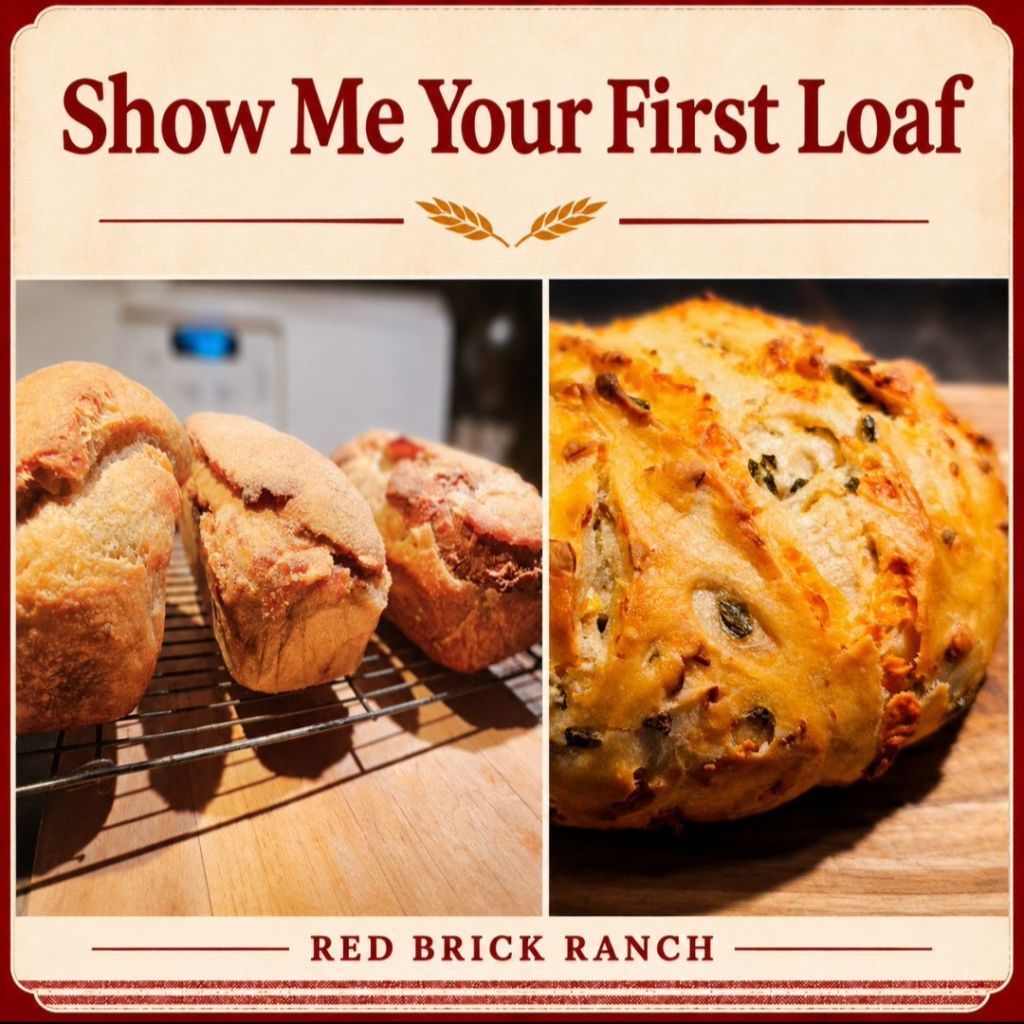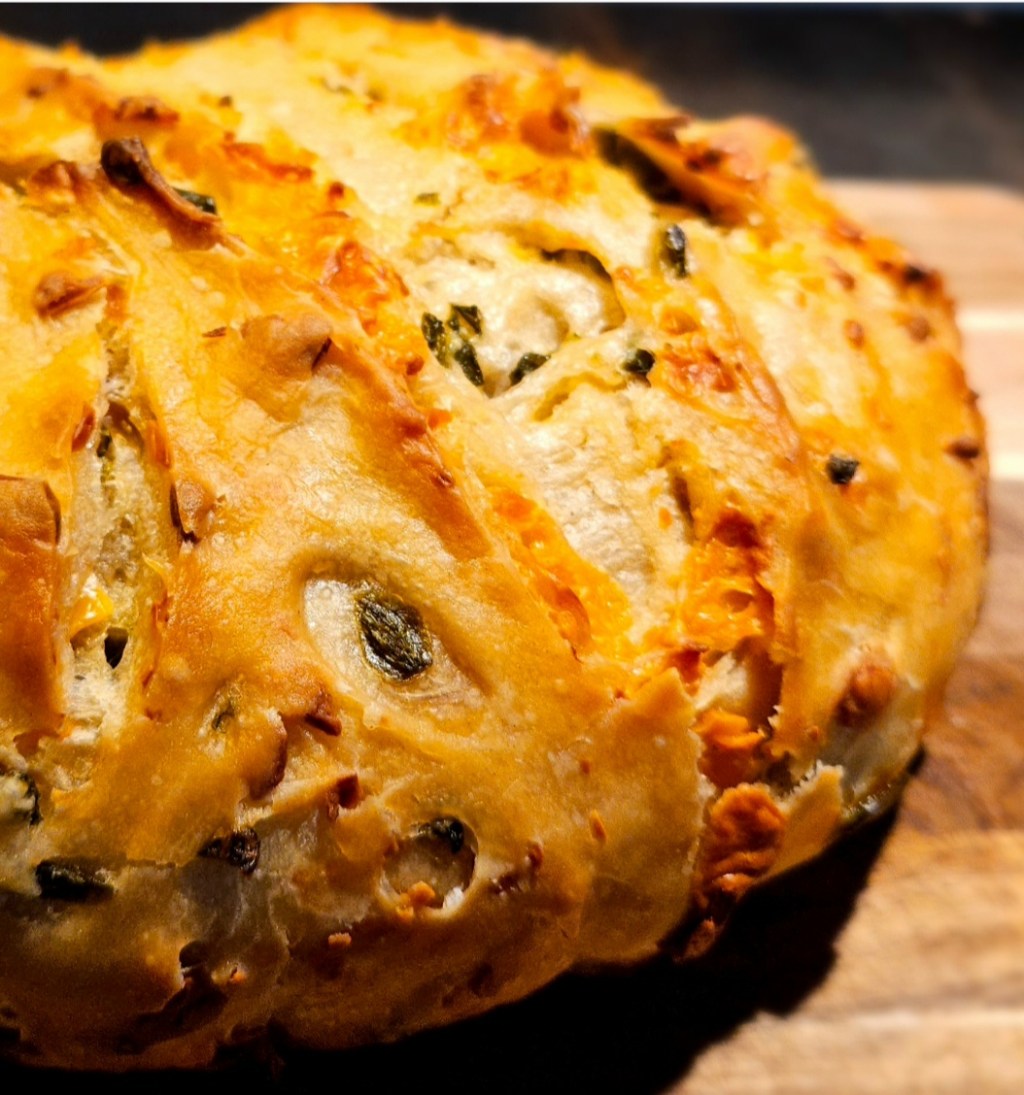
Yield: 2 round loaves
Schedule Start on Day 1 and bake on the evening of Day 2 or the morning of Day 3.
Ingredients
Equipment Needed:
A mixing bowl, plastic wrap, two proofing baskets or two round baskets or colanders lined with dish towels, a damp towel, parchment paper, and a bread lame, razor blade, or very sharp knife. For baking, use a 3½- to 4-quart Dutch oven per loaf or a baking sheet. If you have one Dutch oven, bake the loaves one at a time.
Day 1
1) Morning · Feed the starter. Stir ½ cup unbleached all-purpose flour and ½ cup lukewarm filtered water into your existing starter. Let it sit for 3 to 4 hours.
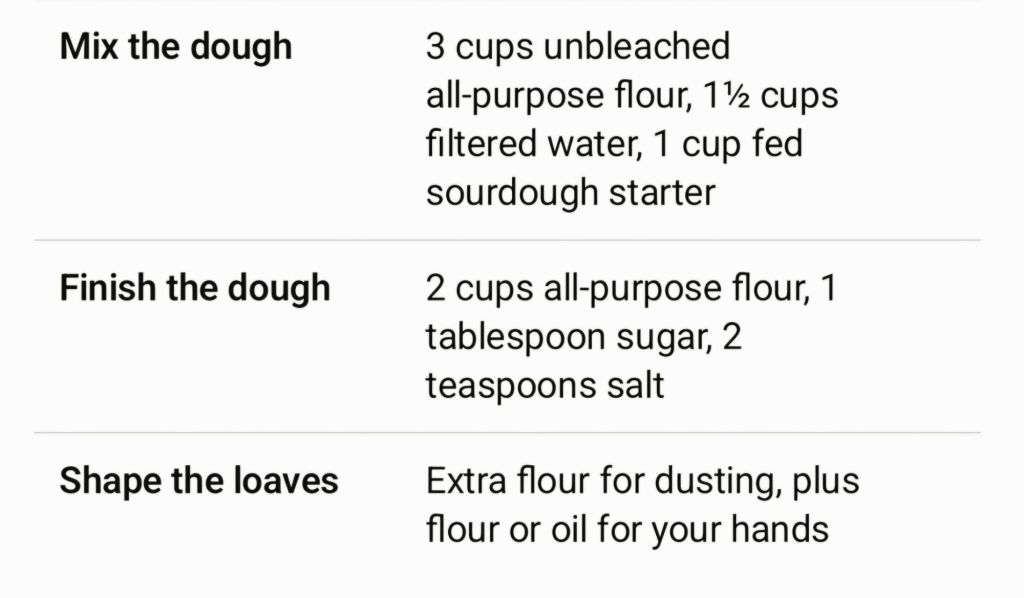
2) Afternoon · Mix the dough. Combine 3 cups unbleached all-purpose flour and 1½ cups filtered water in a mixing bowl. Mix thoroughly, cover, and let rest for 1 hour.
3) Add the starter. Stir in 1 cup of the fed starter and mix vigorously until the dough is loose. Cover the bowl with plastic wrap and let it sit at room temperature for 4 hours. Refrigerate overnight.
Day 2 · Morning
1) Add 2 cups all-purpose flour, 1 tablespoon sugar, and 2 teaspoons salt to the dough. Stir until most of the flour is incorporated.
2) Turn the dough onto a floured counter. With floured hands, knead just until the flour is fully incorporated and the dough is smooth, about 1 minute.
3) Return the dough to the bowl, cover with plastic wrap, and let it rise at room temperature for 1 hour. Refrigerate for at least 6 hours to bake that evening, or overnight to bake the next morning. A longer chill gives the bread a more pronounced sour flavor.
Day 2 · Early Evening or Day 3 · Morning
1) Divide and shape. Generously flour two proofing baskets. Turn the chilled dough onto a lightly floured surface and cut it into two equal pieces. With floured or lightly oiled hands, gently stretch each piece a little wider, then fold each side inward, one at a time, to stretch the smooth underside slightly. Press the folded edges together gently. (*Add additional flavors or inclusions at this point.)
2) Proof. Place each loaf in a prepared basket with the folded side up. Cover with a damp towel and let rise at room temperature for 2 to 4 hours.
3) Check the rise. After 2 hours, gently poke the dough with a finger. It’s ready when it springs back slowly and leaves a slight indent. If it springs back quickly or completely, check again in 20 minutes. If the indent stays exactly as it is, the dough has likely overproofed and may bake up flatter.
4) Turn out and score. Invert each loaf onto its own sheet of parchment so the smooth side faces up. Use a bread lame, razor blade, or sharp knife to make two 1-inch-deep cuts across the top of each loaf.
Bake
Dutch oven
1) As the loaves finish proofing, preheat the oven to 500°F with the Dutch oven inside.
2) Carefully remove the hot Dutch oven. Use the parchment to lower the loaf into it, put on the lid, and bake for 20 minutes.
3) Reduce the temperature to 450°F and bake, still covered, for 20 more minutes.
4) Remove the lid and bake for 5 to 10 minutes, until the loaf is lightly browned and sounds hollow when tapped.
Baking sheet
1) As the loaves finish proofing, preheat the oven to 500°F with the baking sheet inside.
2) Carefully remove the hot sheet and transfer both loaves onto it with their parchment. Mist the inside of the oven with water to create steam, then return the baking sheet to the oven.
3) Bake for 20 minutes, then reduce the temperature to 450°F and bake for 20 more minutes, until the loaves are lightly browned and sound hollow when tapped.
Cool for at least 30 minutes before slicing.