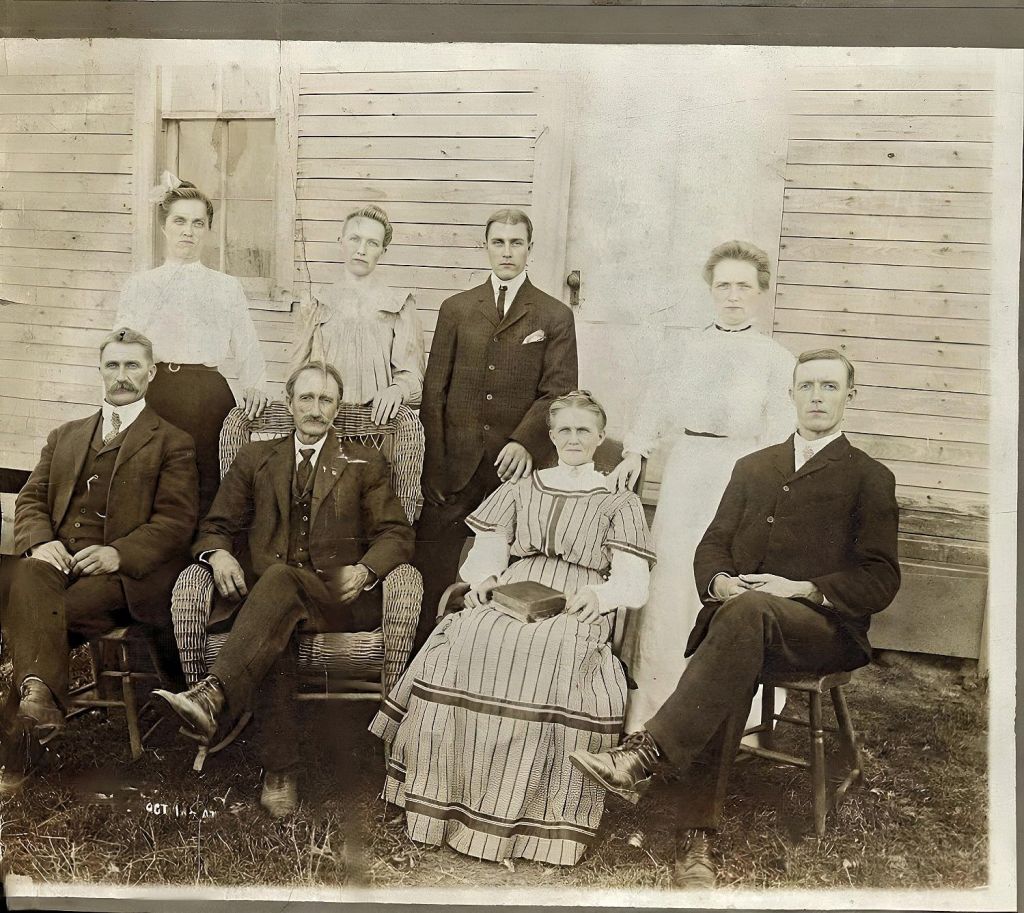
The Brick House

It all began with love….and the Perry Family.

Every great story starts with a fantastic beginning!

Ours just so happens to go all the way back to the very beginning of America…

The Brick House began her life as a beloved family home in 1856, but prior to the first brick being laid it was a mere dream in the hearts and minds of Edwin and Lydia Perry…
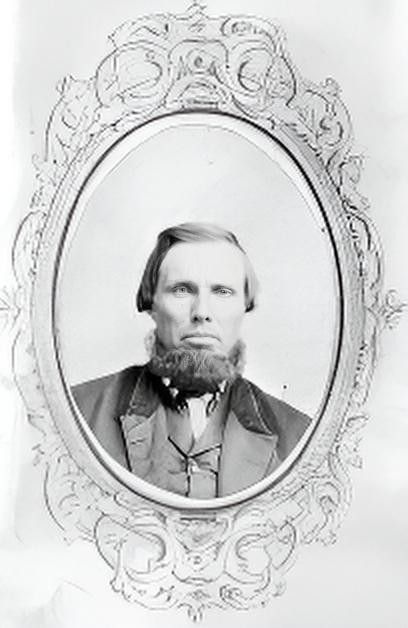
Edwin Perry

Edwin Perry was born on July 2, 1818 in Quebec, Canada to Luke and Irene Perry. He was the third of four children and was born in his parent’s latter years.

As the grandson of, Benoni Patrick, a member of the American Revolutionary War Militia, Edwin was taught at a young age to work hard for your dreams and fight for your convictions.

This would be a theme that would follow the Perry lineage closely…

Lydia Perry

As the granddaughter of Levi Gates, Lydia would have surely been raised on the tales of her grandfather’s great escapades during the French and Indian Wars as well as his military service during the Revolutionary War.

How Lydia met Edwin is somewhat of a mystery, however we know from an entry by Edwin’s own hand in the Perry Family Bible that she arrived from New York in Indiana and married Edwin on June 21, 1837.

The Perry Family

If you’re here…it’s because you want more of the whole story!

But, let’s be honest, who doesn’t usually want more of the real details?

That’s why this section was created!
Just for folks like you and me who enjoy the tiny, minute details of history!

Houses stand as the silent sentries of our lives, standing watch, absorbing our experiences, sheltering us in all seasons. Homes truly can become part of the family. Such is the case of The Brick House and her builders, Edwin and Lydia Perry.

Thus began the process of learning about the Perry Family….

In 1837, at the ages of nineteen-years-old and seventeen-years-old, Edwin and Lydia embarked on this life together as husband and wife.

In 1844, Edwin and Lydia brought their small family to White County, Indiana and settled in the Burnettsville area where they began life as simple farmers, building on to their lives and family one day at a time.

In these young and innocent days of marriage the Perry Family consisted of Edwin, Lydia, and their three small children: Ellen (age 4), Augustine (age 2), and the new baby, Frank.

By 1850, The Perry Family had grown to eight children:
Augustus – 1842
Francis – 1844
Plumea – 1845
Alfred – 1847
Alvin – 1850

Their farm in White County was successful and life was good!

In 1851 Edwin and Lydia were excitedly expecting their third daughter, but they were struck by an unexpected blow with their ten-month old infant, Ulvin died on February 10, 1851, from an unknown cause.

Seven months later, their daughter, Samantha, was born. Life resumed its normal pace, and the Perry Family was quickly growing all aspects.

By this time, three of Edwin’s four siblings were living nearby and the family was prospering! They were well-known in White County for their position as the Perry Family; they were prominent farmers, a revered minister, a respected schoolteacher, pioneers, and brave settlers of this new Hoosier territory.

Despite their success, heartache struck again in October of 1853 when Samantha also passed away, one month after her first birthday.

Edwin and Lydia decided to move their family from their established farm in White County to Carroll County in order to start a new chapter.

Thus, The Brick House was built…

1855 came in with a bang as the house plans came into full swing, as well as more baby news!

Lydia was now 35 years-old, but her body must have felt strong as multiple pregnancies, and a long life were still before her, and she showed no signs of slowing down as she worked with Edwin to build their assets from one census to the next.

Birth records show that twin girls would be joining them the following October which means work would be divided between building the new farm and maintaining the White County farm. Luckily, we have a clue in the 1860 census as to how this feat was accomplished.

Charles Haines, Edwin’s brother-in-law, was listed as a Brick Contractor, additionally, Charles’ oldest son was training as his apprentice. The Haines Family’s tremendous levels of success could be seen in the parallel columns where their assets were listed compared to their neighbors. Charles Haines was a very wealthy man who made his living designing and building brick homes.

It only takes a little bit of imagination to connect Charles Haines to the building of the Brick House, however without proof, speculation is the best option available to us.

The original plot of land was an eighty-acre tract. This was a fairly common size plot of agricultural land in the 1850’s as communities encouraged settlers set down roots.

Shortly after Edwin acquired the property with the stunning view, masons began to hand form each individual clay brick that would house Edwin and Lydia’s family. Each piece of wood was intentionally selected and purposely chosen from the land where the Brick House would stand.

The floors are quartersawn oak, and the fireplace mantles are sanded hickory, all cut from the trees which had thickly covered this hillside haven.

In 1856, the home was done and the Perry family moved in, but tragedy struck again when one of the twins died on September 20, 1856, she was 11 months old.

In five years, Edwin and Lydia had birthed and buried three of their
nine children.

In 1858, Edwin and Lydia tried once again
and they were blessed with a baby boy, Dennis, on March 28, 1858.

Dennis is the first Perry baby born in the Brick House, surely this was seen as a turning of the page on a rough season of life.

From 1858 until 1861, life continued on fairly calmly for the Perry Family.

As stout Abolitionists and people of strong religious convictions, they hosted church in the upper floor of the Brick Home weekly, and they shared their faith and life with those who need them while still building their family and farming operations.

Whether or not they worked in conjunction with the Underground Railroad, as was suggested by community members, was never made clear.

It had been 5 years since the final brick was laid, and
the drums of the Civil War began to echo across America.

In April, 1861, at the age of nineteen, Augustus Perry answered that call
and joined in the Union Army…possibly.

For transparency’s sake, the most challenging
aspect of this whole project was trying to determine the Perry’s position on military service during the Civil War years.
In fact, I spent weeks researching this only to run into dead ends repeatedly…

What I can tell you is this:
The Perry Family is still rumored to this day to have been very passionate about matters of equality, which leads me to believe they would have felt passionate about the Civil War as well.
But, per their reported religious beliefs, they would have been called to shun violent conflict and warfare.

What do you do when your beliefs and your convictions run contrary to one another?

Within the Civil War muster rolls, I have found 2 men named Augustus Perry, however
neither of them are our Augustus.

This became apparent when their records continued on in their respective States during the years following the conflict.

At this time, it remains unclear if Augustus served in an official capacity in the Civil War.

I would be tempted say he did not, however there is evidence
that he may have served under an alternative name.

This evidence is limited and found in a very damaged Union muster.

This entry is peculiar in the fact that it was entered into a Massachusetts muster roll with a litany of other Perry family members who were all enlisting at the same time from the region which Edwin’s family of origin had come in the early 1800’s.

Did Augustus leave Indiana and go fight under a different name due to conflict of religious and personal beliefs? Or did he stay in Carroll County and labor on the farm and help keep the home front safe?

I personally cannot say with any authority either way.

On September 14, 1862, Lydia gave birth to the last baby that would be born to her and Edwin.

A baby girl, Manerva, surely provided the mother’s heart a welcome distraction from the chaos of a nation at war with itself.

This distraction was short lived.

Heartbreakingly, illness swept through the Brick House in March of 1863.

On March 3, 1863,
Emeline, the remaining twin died.

On March 5, 1863,
Dennis, the first Perry baby born in the Brick House died.

On March 11, 1863,
Manerva, the last Perry baby born in the Brick House died.

On April 9, 1865, the Civil War was declared to be over, and the Union had won.

The Reconstruction Era had begun, and America was moving forward.

On October 10, 1867, two years after at the completion of the war, Augustus married Ms. Hannah Campbell.

For a short period, the newly formed couple farmed Edwin’s original farm in White County before moving back to Carroll County. They were the proud parents of 7 sons and 5 daughters.

In 1866, Edwin and Lydia’s final loss came when their first born, Ellen, died at the age of 26.

Loss was common in those days, especially in a territory only recently settled. But, as I think of the loss of nine children out of eleven, my heart grieves for these parents.

The same closeness that paralleled Edwin’s relationship with his siblings, can be seen in the remaining three Perry siblings, Augustus, Frank, and Plumea, who goes by Malinda.

The siblings start their own families, but by 1880 they were all working the Perry Farms in White and Carroll Counties and the combined 160 acres together.

Edwin and Lydia were starting to approach their twilight years, and they allowed more and more of the management of the White and Carroll County farms to go to each son.

According to census records, it would appear around 1890, Augustus and Hannah moved into the Brick House and officially took over the management of the Carroll County farm while Frank leaned more into the White County property.

Edwin died on July 24, 1894, in the refuge of the Brick House, surrounded by his wife and family.

Six years later, on December 18, 1901, Lydia also passed away at home due to pneumonia.

They had lived in the Brick House for 45 years, lost 9 children, loved one another for 57 years, and built a life of substance together after starting with next to nothing.

Augustus and Hannah took over ownership of the Brick House and continued to run the Carroll County and White County farms mutually with Frank until Augustus’ death on
April 10, 1909.

After Augustus ‘ death, the last living Perry daughter, Malinda, moved into the Brick House with her husband George.

Hannah, Augustus’ wife, retained ownership of the home, however the farm was still bustling and as a result the family pulled together to maintain it.

Hannah died on September 13, 1922, leaving a mix of the Perry descendants to manage the remaining farm operations under Melinda and George’s watchful gaze.

Melinda was now the only remaining Perry from the original family.

By 1930, Malinda was in her eighties and widowed as George passed away in 1928.

The Perry family descendants were still running the farm, but as the Great Depression neared, operations slowed substantially.

It was no longer the premiere jewel, set atop the Wabash Valley, perfectly situated for the new and improved modes of travel and trade as it had been in 1856.

It was now just an old Indiana farmhouse that someone’s great-grandfather built long ago…

George and Malinda’s daughter, Mary Cree, began to take care of Malinda as the seasons of life change again in the Perry family.

Malinda, the final eyewitness of Edwin and Lydia’s lives, passed away on May 18, 1931.

Her daughter, Mary, passed away 5 years later on June 27, 1935.

After Mary’s death, Frank’s granddaughter, Willow Stewart took possession of the Brick House.

She and her husband, Everett, were not blessed with children of their own,
however, they claimed their niece, Mary Alice, as their daughter and raised her in their mutual family home. In fact, I still have Mary Alice’s doodles on one of the walls, proving that through the Ages children remain the same.

The Brick House remained in the Perry Family until Willow sold it on June 23, 1989.

Willow and her husband, Everett, the last of the Perry family descendants to live at the Brick House and farm Edwin’s land.

Everett passed away on March 20, 1979.

Subsequentially, Willow rented the home out to the Keeler Family for the majority of the 1980’s.

As the years passed the Brick Home changed hands from the Perry descendants to the Fassnacht family in 1989, followed by the Riffey family in 1996.

Thankfully, the Riffey family saved the Brick House by conducting a full-scale update and renovation of the home.

On October 25, 1996, Jeffery and Abby Rider bought the Brick House as their first farm before they moved on to more acreage in White County.

On October 19, 2020, Nathan and Misty Frost joined the legacy of the owners of the Brick House and bought a piece of true American history.

The Brick House…
Lives. Love. Legacy.

Faces Behind the Names

Edwin Perry’s Obituary

Plumea “Malinda” Perry with her husband George and their children. Malinda moved into the home when it was first built in 1856 at age 11, she then moved out to raise her own family and move back in at the age of approximately 64 years-old to care for the aging, Hannah.
Carroll County, IN Civil War Conscription Log Book. Augustus is listed here as a resident, however these logbooks didn’t verify the presence of the resident, simply that a male of fighting age lived in the County.
Union Enlistment Log bearing the name Edwin A. Perry, we know that Edwin stayed in Carroll County, however there is a persistent pattern of a variation of the names Edwin and Augustus Perry that pop up regularly throughout the Union reels.
If one were to follow the reels it would appear that Augustus enlisted early via a Massachusetts infantry unit. He was injured repeatedly, yet returned to fight, eventually ending his career in the Massachusetts militia after presumably being denied further entry into the Union Army. This would make sense as to why Augustus seemingly disappeared for the Civil War years, returning and marrying in once the war ended. However, time is the best secret keeper and without proof I can not, in good faith, assert this claim as fact. However…after five years of chasing military records, census reports, and hearing local lore, this is the way I personally tend to lean.