
Should I use a solid or a porous lid?
At some stages, such as when your starter is first getting established, using a porous lid such as cloth covering or a coffee filter is preferred.
One of the amazing things about starters is that they absorb the yeast and the positive bacteria from the air around us. They then take this beneficial bacteria and use it to create a living culture that can be used to improve your health.
But, as we know, there is more in the air around us than beneficial bacteria.
Pourous coverings should only be used the first 2-3 days after the initial rehydration of your dehydrated starter. After the first few days, it is usually best to replace the porous lid with a solid one.
This will keep out the stuff you don’t want in your starter and keep your new friend in a balanced, sanitary environment.
Our double-layered, washable, adjustable jar and bowl covers are the perfect option for allowing your starter the proper access to fresh air during the initial activation period.
Check them out HERE!

When to wash the jar?
I personally wash my jars by hand with scalding hot soapy water, daily, at every feeding.
I usually feed my starter first thing in the morning, as a result it has become a routine to allow them to munch away in glass bowls covered with securely fitting lids, as their “home jars” air dry.
Approximately 2-3 hours later, I’ll pour the remnant portion back into the dry jar, secure the lid, and use the discard according to that day’s plans.
Do you need to be so thorough?
That is up to each baker, but for me this routine works well and I don’t have to deal with moldy, nasty, or contaminated starter.
How do I know if my starter is bad?
Usually this is undeniable…
A bad starter will smell absolutely horrible and look disgusting.
If you ever see mold or streaks of color (pink, green, black, etc) then it is likely contaminated and should be discarded into the trash.
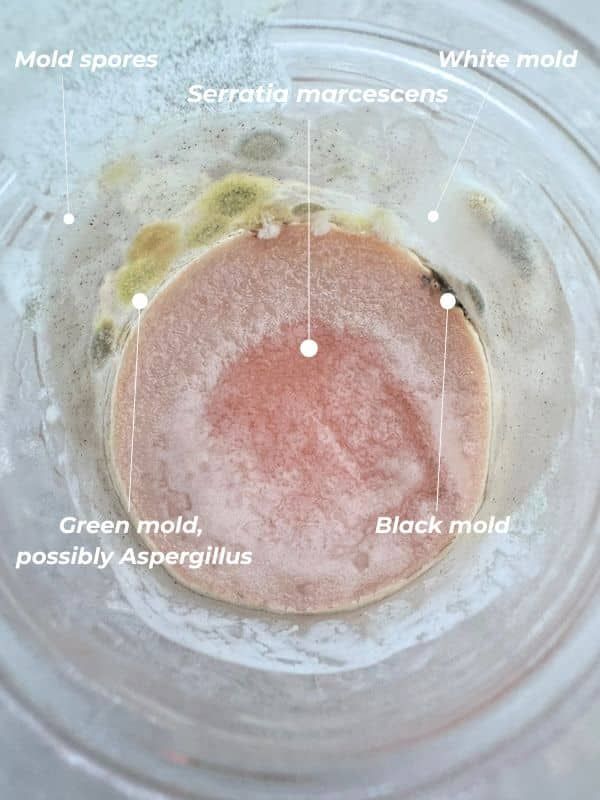
A starter that refuses to bubble or rise at all after feeding is dead and should also be discarded. However, only discard after you are certain it will not revive post feeding.
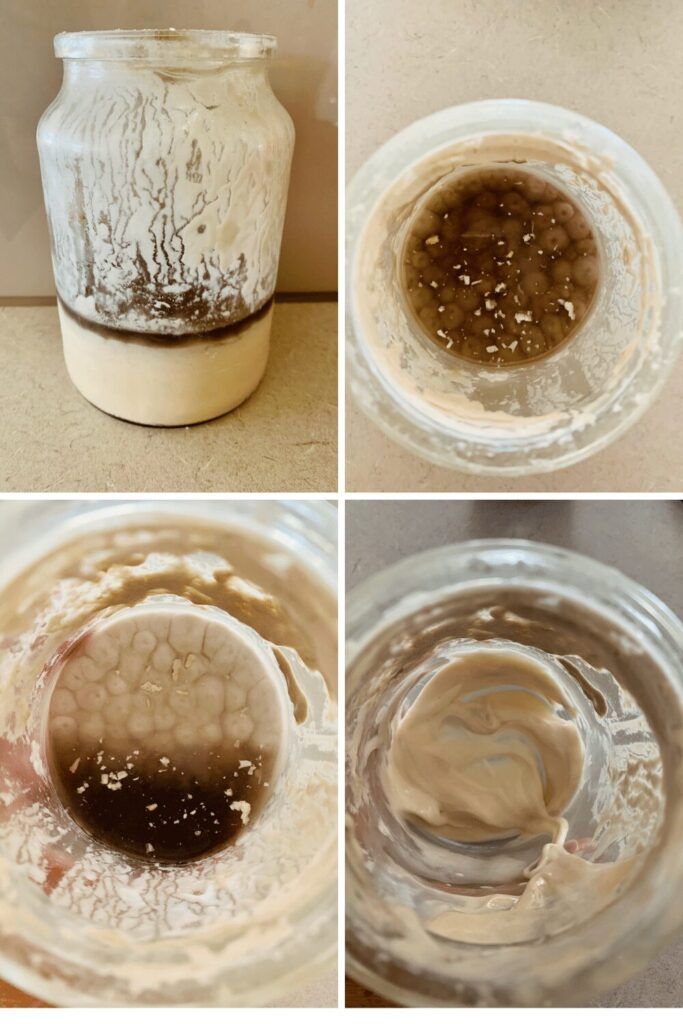
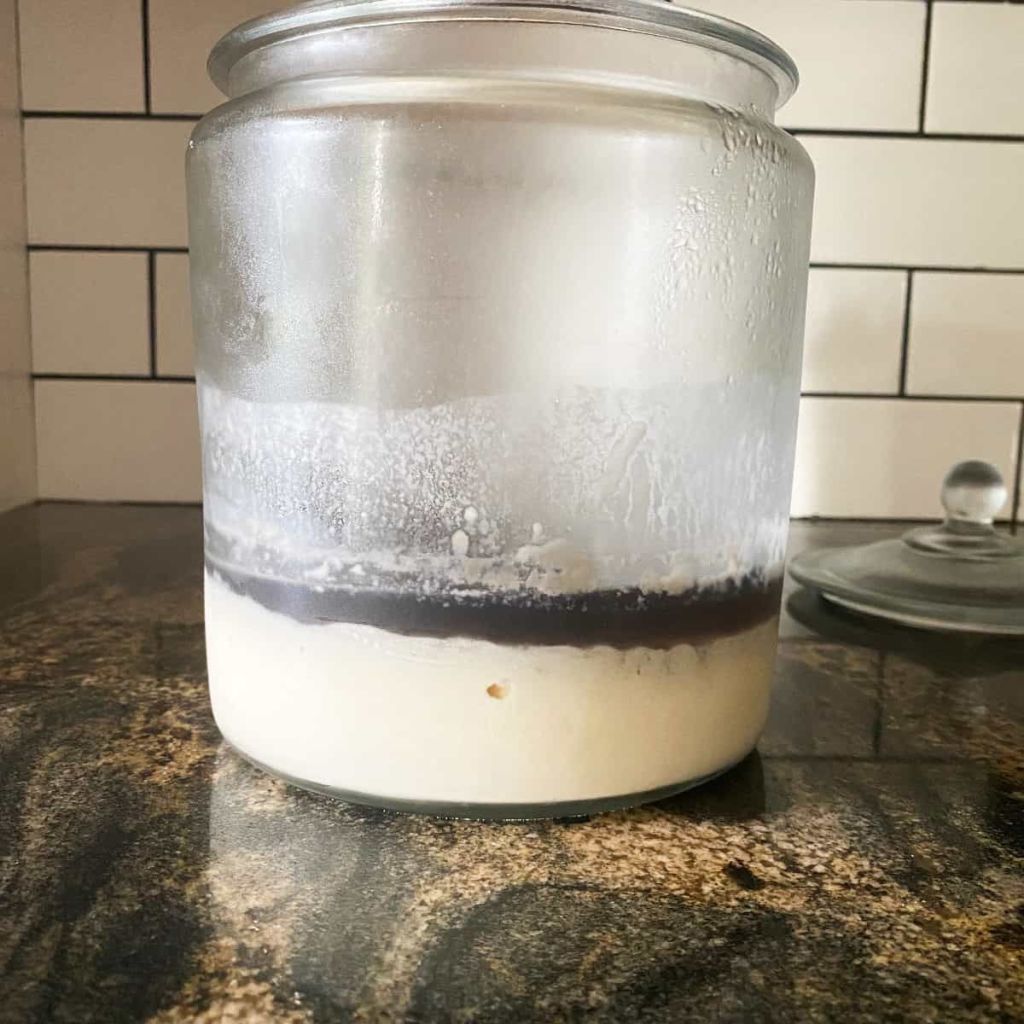
If your starter is covered in clear-ish liquid then it is likely ok.
What is that liquid?
Well, that’s up next…
What is this on my starter?
If you neglect your starter then it will eventually run out of food and begin creating a clear liquid called hooch.
Can you drink it?
ehh…yes…kinda…but…moving on…
Hooch can stirred in but many bakers will pour it off as they feel that stirring in a waste product causes their bread to become bitter.
There are other bakers who will purposely starve their starters in a controlled manner in order to produce hooch so that they can develop a more sour flavor.
The choice is yours.
The color of the hooch will change over time.
The longer that the starter is neglected, the more densely it compacts and the darker the hooch gets.
If neglected long enough, the hooch will turn into a thick layer of black liquid. The solid portion of the starter will settle to the bottom of the bowl while the black hooch covers it all in a disgusting sludge.
I feel it is unwise to use a starter that has reached this level of neglect.
 Redbrickranch.net